The time has come. You have some cash saved up to renovate your beloved home — to finally add an additional garage, or a second bathroom, or create a sheltered entertaining area in the back garden, just like you wanted to when you first moved in. You are ready to get cracking, and start talking to a local builder, predicting everything will be finished by the time your in-laws visit in December.
Your house is old, but that shouldn’t be an issue, right? I mean, old houses are renovated all the time. But the more research you do, the more you start hearing odd things like HPOZ and “Heritage” and committees’ consent, and you start feeling anxious, worrying that the whole process will be so complicated and you have absolutely no idea where to begin. If only there was someone to hold your hand through the process. Or maybe if you just build your extension at the back, no one will even know, and you won’t have to deal with the headache of council submissions.
At this point I would jump in and shout:
Do not be tempted to build illegally!
And here’s why:
- Any illegal alterations to a heritage building are considered a heritage crime and can result in fines or a prison sentence.
- When selling your home in future, you will be required to provide updated plans that have been approved by the local authorities.
- Illegal building in heritage areas not only causes conflict between neighbours but also degrades the area’s value.
How do I know if my home is classified as a heritage building?
According to Heritage Western Cape (HWC), if your home is older than 60 years, it is a heritage building, and any alterations will have to be approved by HWC as well as your local Development Management Branch.
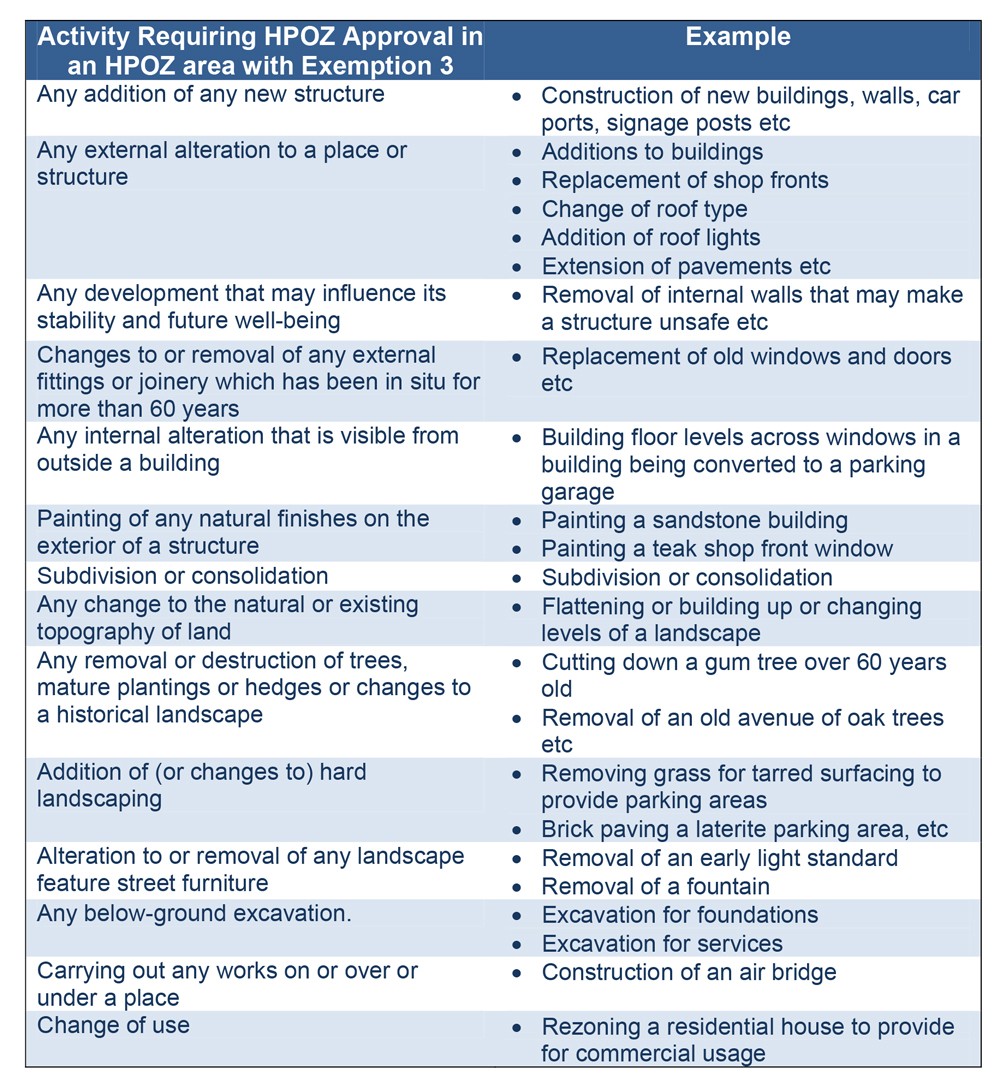
That doesn’t mean every single change needs sign-off, but it does mean more than most people expect. Even in areas with certain exemptions, a wide range of everyday renovation work still requires HPOZ approval — here’s a snapshot of what that typically includes.
So what should you actually do?
The good news is that heritage approval is a known process, not a mystery. It just needs to start earlier than most people expect — ideally before you’ve booked a builder or set a date for your in-laws’ visit.
A heritage-experienced architect can tell you early on which of your plans will need approval, prepare the motivation and drawings HWC and your local Development Management Branch expect, and manage the submission on your behalf. It typically takes months rather than weeks, so building that time into your planning from the start makes the whole process far less stressful. Done properly, most sensitively designed renovations to heritage homes are approved — the goal isn’t to stop you renovating, just to make sure the character that made you fall in love with the house in the first place is kept intact.
If you’re at the start of this process, my free guide walks through the questions and documents worth sorting out before your first consultation.
Or if you’re ready to talk it through, I’d love to hear about your home and what you’d like it to become.